- Most Read
- Most Cited
- Most Downloaded
LI Mengyao , HUANG Minli , ZHANG Yongbin , SHI Changhong
2026, 34(4):469-482. DOI: 10. 3969 / j.issn.1005-4847. 2026. 04. 001
Abstract: Objective This study aimed to examine how gambogic acid (GA) modulates pancreatic cancer cell sensitivity to gemcitabine (GEM) chemotherapy, and to elucidate the underlying molecular mechanisms involved. Methods GEM-resistant pancreatic cancer cell lines were established using a concentration-escalation method, and GA suppressive activity against drug-resistant cell proliferation was assessed. The influence of GA on leucine-rich repeat-containing protein 8A (LRRC8A) expression was examined with quantitative reverse transcription PCR(RTqPCR)and Western Blot analyses. A LRRC8A-knockdown patient-derived organoids (PDOs) model was constructed,and the half-maximal inhibitory concentration of GEM post-knockdown was measured using the Cell Titer-Glo luminescence assay to explore the synergistic effect of GA and GEM on cell viability. Potential targets through which GA mitigates chemoresistance were forecasted using network-based pharmacological approaches and molecular docking simulations, with subsequent Western Blot analyses providing experimental verification. Murine xenograft models bearing human pancreatic carcinoma were established to monitor the therapeutic impact of GA on neoplastic growth.Comparative immunohistochemical analysis of LRRC8A expression levels was conducted pre- and post-intervention. Results GA significantly inhibited the growth of GEM-resistant pancreatic cancer cells and patient-derived organoids and effectively enhanced cellular sensitivity to GEM by regulating LRRC8A/ STAT3 signaling. In vivo experiments further confirmed that GA intervention significantly reduced LRRC8A expression and suppressed pancreatic cancer progression. Conclusions GA-mediated downregulation of LRRC8A conferred GEM sensitivity in pancreatic cancer cells.
TAN Biyu , LI Shuling , TANG Weili , DU Xiaomei , LIU Jian , ZHANG Qiong , HU Qiongdan
2026, 34(4):483-495. DOI: 10. 3969 / j.issn.1005-4847. 2026. 04. 002
Abstract: Objective To investigate the preventive effects and potential mechanisms of Shenxiankang in chronic kidney disease-mineral and bone disorder ( CKD-MBD). Methods A rat model of CKD-MBD was established. Serum creatinine(Scr) and blood urea nitrogen(BUN) were measured. Serum levels of bone alkaline phosphatase(BALP), intact parathyroid hormone ( iPTH), vitamin D3 (VD3 ), cartilage oligomeric matrix protein (COMP), fibroblast growth factor 23 ( FGF23), klotho, and fibroblast growth factor receptor 1 ( FGFR1) were determined by ELISA. Histopathological changes in renal tissues were examined using hematoxylin-eosin ( HE),Masson, and picrosirius red staining. Femoral tissue morphology was assessed by HE, Masson, and tartrate-resistant acid phosphatase staining, while femoral structural parameters were evaluated using micro-computed tomography. The mRNA and protein expression levels of COMP, FGF23, klotho, and FGFR1 in renal tissues were analyzed by quantitative real-time reverse transcription PCR(RT-qPCR) and Western Blot. In addition, the expression of these molecules in renal and bone tissues was examined by immunohistochemistry. Results Compared with CKD-MBD group rats, Shenxiankang treatment significantly reduced serum creatinine, blood urea nitrogen, bone alkaline phosphatase, intact parathyroid hormone, COMP, and FGF23 (P<0. 01, P<0. 05), while significantly increasing serum VD3 , klotho, and FGFR1 (P<0. 01). Shenxiankang also alleviated renal injury, collagen fiber deposition,and inflammatory infiltration and improved osteoporosis and bone metabolic abnormalities. Furthermore, Shenxiankang downregulated mRNA and protein expression of COMP and FGF23 in renal tissues (P<0. 01), while upregulating mRNA and protein expression of klotho and FGFR1 ( P<0. 01, P<0. 05). Immunohistochemical findings were consistent with these molecular result. Conclusions Shenxiankang effectively prevents and treats renal and skeletal abnormalities in CKD-MBD rats. Its therapeutic effects may be associated with downregulation of COMP and modulation of the FGF23-klotho signaling axis.
WANG Qianmei , YAO Pu , WANG Yu , SUN Fengjun
2026, 34(4):496-504. DOI: 10. 3969 / j.issn.1005-4847. 2026. 04. 003
Abstract: Objective To establish and systematically evaluate a mouse chronic pulmonary Pseudomonas aeruginosa (PA) infection model, providing a reliable method for establishing a model for drug treatment of chronic PA infections. Methods A feasible modified method was used to prepare PA-coated alginate microbeads. A chronic PA infection model was established in C57BL / 6J mice using tracheal intubation instillation. Model success was systematically evaluated by observing changes in physiological state, blood routine analysis, bacterial load measurements in bronchoalveolar lavage fluid ( BALF) and lung tissue, measurement of inflammatory cytokine expression, and histopathological section analysis. Results After intratracheal instillation of alginate microbeads coated with PA, the infected mice showed poorer physiological condition and higher mass loss compared with mice in the normal and the saline-alginate microbead groups. PA was cultured from model mouse lung tissue homogenate and BALF, and the number of white cells and neutrophils in the blood significantly increased (P<0. 05). Additionally,levels of the pro-inflammatory cytokines tumor necrosis factor-α( TNF-α) and procalcitonin( PCA) in BALF were significantly elevated. Hematoxylin-eosin ( HE) and Masson staining of lung tissue pathological sections revealed significant inflammatory cell infiltration and pathological changes in the model group. Conclusions PA-coated alginate microbeads were successfully prepared using a modified method, and a chronic pulmonary PA infection model was established in mice through tracheal intubation instillation, providing a practical and feasible experimental animal model for PA infection drug treatment research.
HE Siyi , TONG Ruoyi , ZHOU Haiyi , LI Jiuli , GUAN Yongge , SONG Yang
2026, 34(4):505-518. DOI: 10. 3969 / j.issn.1005-4847. 2026. 04. 004
Abstract: Objective Compared with the simple mechanical injury method and the artificial abortion mechanical injury method, to explore the animal model which is more in line with the clinical etiology and disease characteristics of endometrial injury and to explore the reasons why intrauterine operation during pregnancy is more likely to cause injury. Methods 42 female rats were randomly divided into 3 groups: sham group(n= 6), simple mechanical injury (S)group(n= 18), and artificial abortion injury (A)group(n= 18), except for the Sham group,the other two groups were divided into 3 subgroups, which were taken in the first, second and third estrous period after operation. The histopathology changes of endometrium were observed by HE staining, the degree of endometrial fibrosis was observed by Masson staining, and the expression of CD31 and LIF in rat uterine tissue was detected by immunohistochemistry The expression of CD68 in endometrium was detected by immunofluorescence. Serum levels of inflammatory factors and hormones were measured by ELISA, and the expression of CD68, CD86 and TGF-β in endometrium was detected by Western Blot. Results (1) In the third estrous phase after surgery, the pathological changes of the uterus in group S were small, and the changes of endometrial thickness, epithelial cells and macrophages were not significant, there was no significant difference in the level of inflammation between the group S and Sham group. Only the level of fibrosis and the ability of vascular regeneration were consistent with the clinical characteristics of endometrial injury. However, in the group A, the endometrium became thinner, the number of glands decreased, the luminal epithelial cells decreased significantly, the expression of macrophages increased and was accompanied by obvious inflammatory response, and the level of uterine fibrosis increased significantly, the ability of vascular regeneration was decreased. Four dimensions were in line with the clinical characteristics. ( 2) After modeling with both Methods, the level of endometrial fibrosis inereased with the increase of injury time and the level of serum inflammatory factors decreased with the inerease of injury time, however, the level of inflammatory factors decreased more slowly and the inflammatory reaction lasted longer in group A. Conclusions The artificial abortion injury model is more in line with the current understanding of the clinical etiology and disease characteristics of human endometrial injury, the reason why the uterine cavity operation during pregnancy is more vulnerable to injury may be related to the sustained high expression of macrophages, which leads to the chronic inflammation of the endometrium.
WANG Dongping , LIU Chang , ZHU Yihao , GU Shuling , CHENG Pinying , GAO Yihan , FENG Ziqi , LI Zibin , LI Yongxian , ZHANG Shuncong
2026, 34(4):519-530. DOI: 10. 3969 / j.issn.1005-4847. 2026. 04. 005
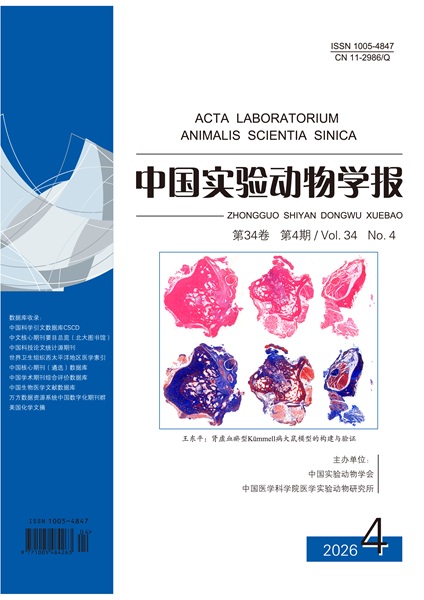
Abstract: Objective To establish an animal model of Kümmell disease ( KD) characterized by kidney deficiency and blood stasis, providing a foundation for exploring therapeutic targets and underlying pathophysiological mechanisms. Methods Forty SD rats were randomly assigned to normal, osteoporosis ( OP ), sham operation ( Sham), control, and model(KD) groups. Rats in the KD group underwent ovariectomy to induce kidney deficiency,followed 2 months later by creation of coccygeal bone defects and application of mechanical stress for 4 weeks. One week after bone defect surgery, subcutaneous injections of adrenaline hydrochloride were administered to induce blood stasis. Control group rats underwent ovariectomy and bone defect surgery but received 0. 9% sodium chloride solution.During the experiment, body temperature, body mass, food and water intake, and tongue characteristics were monitored. After model establishment, behavioral assessments, imaging analyses, hemorheological testing, and histopathological examinations were performed. Results Compared with the sham and control groups, KD group rats showed elevated body temperature, mass loss, reduced food intake, purple tongues with tortuous sublingual veins, dry fur, lethargy, and impaired mobility. Imaging revealed cortical thinning, sparse and fractured trabeculae, and vacuum cleft signs in vertebral bodies. Hemorheological evaluation showed significantly increased whole blood viscosity at low, medium, and high shear rates, increased plasma viscosity, elevated fibrinogen levels, and shortened thrombin time, prothrombin time, and activated partial thromboplastin time. Serum calcium and phosphorus levels decreased, while bone turnover markers increased. Thyroid hormone and estradiol levels were significantly lower than in the sham group. Histopathological examination showed KD group disrupted trabecular structure and reduced new bone formation compared with the control group. Conclusions Combined ovariectomy, adrenaline-induced blood stasis, and mechanical stress successfully establish a rat model of KD with kidney deficiency and blood stasis syndrome, providing a useful platform for mechanistic studies and therapeutic evaluation.
XIE Yunyun , YANG Fan , SUN Shuding , PENG Yunpeng , SUN Xin , LU Ruilong , TIAN Yange
2026, 34(4):531-543. DOI: 10. 3969 / j.issn.1005-4847. 2026. 04. 006
Abstract: Objective Based on metabolomics technology, to clarify the specific endogenous biomarkers and their mechanisms in lung tissues of mice with pulmonary fibrosis. Methods Sixteen C57BL / 6J mice were randomly divided into control group and bleomycin model (BLM) group. A mouse model of pulmonary fibrosis was established.Indicators such as lung function, lung pathology, and hydroxyproline (HYP) levels were detected in each group.Correlation analysis and value evaluation between key differential metabolites and pathological indicators were performed to screen potential biomarkers, followed by functional analysis and pathway enrichment. A multi-layered“biomarker-disease-related target-pathway” interaction network was constructed to clarify the core mechanisms of biomarkers in pulmonary fibrosis. Additionally, qPCR was used to detect the mRNA levels of core targets. Results Compared with the control group, mice in the BLM group showed significant reductions in body mass and lung function (P<0. 01), accompanied by disordered lung tissue structure, damaged alveolar walls, and increased lung coefficient and lung tissue collagen levels (HYP) (P<0. 01). Metabolomics result revealed altered metabolic profiles in mice with pulmonary fibrosis, with differential metabolites primarily enriched in the arachidonic acid metabolism pathway.Correlation analysis and value evaluation of the top 10 significant differential metabolites identified 8 biomarkers significantly associated with pulmonary fibrosis characteristics (P<0. 01, P<0. 01, P<0. 05). The multi-layered interaction network indicated that the core mechanisms of these biomarkers mainly involve inflammatory responses and cell proliferation. qPCR result showed that 6 core targets were significantly upregulated in lung tissues of mice with pulmonary fibrosis (P<0. 05, P<0. 01). Conclusions The metabolic profile of mice with pulmonary fibrosis is altered. Biomarkers such as Capryloylglycine, S-( PGA1 )-glutathione, Corticosterone, Thymidine, 3-Oxotetradecanoic acid, 3-Hydroxybutyric acid, Uridine, and 3-Hydroxysebacic acid may play important roles in the progression of IPF by regulating inflammatory responses and cell proliferation through targets including IL-6, EGFR,CXCL8, MMP9, PTGS2, and MAPK3.
WANG Xinzhou , LEI Zehao , LIU Shanshan , QIN Nan , YU Xiaofang , WU Hong
2026, 34(4):544-552. DOI: 10. 3969 / j.issn.1005-4847. 2026. 04. 007
Abstract: Objective To establish a double-knockout mouse model of apolipoprotein E ( ApoE) and macrophage-specific Krüppel-like factor 2 (KLF2) and to investigate the role of macrophage KLF2 in the progression of atherosclerosis. Methods KLF2flox / flox/ Lyz2-Cre+ mice were crossed with ApoE- / - mice over multiple generations to generate KLF2flox / flox/ Lyz2-Cre+/ ApoE- / - mice. KLF2 knockout efficiency at the mRNA and protein levels was verified by reverse transcription quantitative polymerase chain reaction(RT-qPCR) and Western Blot analysis. Atherosclerosis was induced by feeding mice a high-fat diet. Plaque formation and lipid metabolism were compared between the model group (KLF2flox / flox/ Lyz2-Cre+/ ApoE- / -) and the control group ( KLF2flox / flox/ ApoE- / -). Results A macrophagespecific KLF2 and ApoE double-knockout mouse model ( KLF2flox / flox/ Lyz2-Cre+/ ApoE- / -) was successfully established. Histopathological analysis demonstrated significantly increased aortic root plaque area and lipid accumulation in the model group compared with controls. In addition, the model group exhibited markedly elevated serum total cholesterol, triglycerides, and low-density lipoprotein cholesterol levels, as well as increased hepatic lipid accumulation.Macrophage infiltration within aortic plaques was also significantly higher in the model group. Conclusions Macrophagespecific deletion of KLF2 accelerates atherosclerotic plaque progression, potentially through dysregulation of lipid metabolism and enhanced macrophage adhesion and migration. This model provides a valuable experimental platform for further elucidating the role of macrophage KLF2 in atherosclerosis and related cardiovascular diseases.
LI Su , LONG Yuanxiong , FANG Chi , YONG Sunan
2026, 34(4):553-563. DOI: 10. 3969 / j.issn.1005-4847. 2026. 04. 008
Abstract: Objective To investigate the effect and mechanism of Tianma Xiongling Zhixuan tablets on the kidneys of spontaneously hypertensive model rat. Methods SHR were purchased as spontaneously hypertensive model rats, and WKY rats were used as normal blood pressure control rats. After adaptive feeding, the rats were divided into 4 groups: (1) Control group (WKY rats); (2) Model group (SHR); (3) Model + TZZT group (SHR+ Tianma Xiongling Zhixuan tablets gavage); ( 4) Model + Valsartan group ( SHR + valsartan gavage). Blood pressure was measured before and after gavage in each group of rats. ELISA and biochemical kits were used to detect TNF-α and GSH, and a biochemical analyzer was used to detect four renal function parameters (creatinine, uric acid,and urinary microalbumin). HE and TUNEL staining were used to detect the degree of kidney tissue damage and cell apoptosis, and immunofluorescence was used to detect the expression of NF-κB P65, p-P65, SIRT1, and PGC-1α in kidney tissue. Results Compared with control group,levels of Model group TNF-α in the serum while the levels of GSH decreased and the levels of creatinine, uric acid, and microalbumin in urine increased. Compared model group, the systolic blood pressure of Model + TXZT and Model + Valsartan group rats significantly decreased, while the diastolic blood pressure showed a decreasing trend but not significant, indicating that Tianma Xiongling Zhixuan tablets and Valsartan have a hypotensive effect; Compared model group,the content of Model + TXZT and Model +Valsartan group TNF-α in rat serum decreased, while the content of GSH increased. Compared model group,the levels of the content of Model + TXZT and Model + Valsartan group creatinine, uric acid, and microalbumin in rat urine decreased, indicating that Tianma Xiongling Zhixuan tablets and Valsartan can inhibit the release of inflammatory factors, suppress oxidative stress, and enhance renal function. Compared with control group,The expression of Model group NF-κB P65 and p-P65 in the kidney tissue of spontaneously hypertensive rats increased, while the expression of SIRT1 and PGC-1αdecreased. Compared model group,the expression of Model + TXZT and Model + Valsartan group NF-κB P65 and p-P65 decreased, while the expression of SIRT1 and PGC-1α increased. This indicates that Tianma Xiongling Zhixuan tablets and Valsartan can increase the expression of SIRT1 and PGC-1α, inhibit the activation of the NF-κB pathway, and thus suppress the inflammatory response. Conclusions Tianma Xiongling Zhixuan tablets can have a protective effect on the kidneys of spontaneously hypertensive rats, by increasing the expression of SIRT1 and PGC-1α in the kidneys of spontaneously hypertensive model rats, reducing the expression of NF-κB P65 and pP65, and inhibiting inflammation related reactions.
GUO Wenxia , WANG Xiaolong , ZHENG Hui , ZHU Zihuan , LIU Tingxiang
2026, 34(4):564-573. DOI: 10. 3969 / j.issn.1005-4847. 2026. 04. 009
Abstract: Objective This study aimed to investigate the therapeutic effect, mechanisms, and safety of hypoxia-pretreated mesenchymal stem cell-derived exosomes ( hMSC-Exos) in a rat model of gestational diabetes mellitus (GDM), and evaluate their potential as a novel therapeutic strategy. Methods Human umbilical cord mesenchymal stem cell were cultured under hypoxic conditions ( 5% O2 ), and exosomes were isolated with ultrafiltration and ultracentrifugation. Female SD rats were randomly divided into 4 groups: normal pregnancy control (Control), GDM model (Diabetic), hMSC-Exos treatment (Exosome), and insulin treatment (Insulin) groups (n= 10 per group). The GDM model was established by intraperitoneal injection of streptozotocin ( STZ, 1%, pH =4. 5) on gestational day ( GD) 0. Body mass and blood glucose levels were measured daily. Hemoglobin A1c (HbA1c) and homeostatic model assessment of insulin resistance (HOMA-IR) were evaluated on GDs 0, 5, 10, and 15. Area under the curve of the oral glucose tolerance test (OGTT-AUC) was calculated after a 12-hour fast on GD0 and 15. Fetal development was monitored by ultrasound at different stages. At the end of pregnancy, complete blood count, lymphocyte subsets T helper 17 cell ( Th17) and regulatory T cell ( Treg) and pregnancy outcomes were analyzed. Results Compared with the Diabetic group, the Exosome group exhibited significantly increased body mass from GD15 (P<0. 0001), and significantly reduced blood glucose from GD10 (P<0. 0001), normalizing by GD20. HbA1c decreased significantly in the Exosome group from GD 10 (P<0. 0001), showing a 22. 6% reduction at GD15. At term, HOMA-IR was significantly lower in the Exosome group (P<0. 0001). Post-treatment (GD15), OGTT-AUC in the Exosome group decreased by 46. 65% (P<0. 0001). Ultrasound indicated improved fetal growth in the Exosome group. Treatment caused no severe hematotoxicity or immune dysregulation; Th17 proportion was significantly lower (P<0. 01), Treg proportion significantly higher (P<0. 05), and the Th17 / Treg ratio decreased 3-fold in the Exosome group compared with the findings in the Diabetic group. Fetal mass and number were significantly higher in the Exosome group (P<0. 001). Conclusions hMSC-Exos therapy effectively ameliorates glucose metabolism, alleviates insulin resistance, modulates Th17 / Treg immune balance to improve the gestational milieu, and promotes fetal development in GDM rats, demonstrating favorable safety.
JIN Yizhou , YANG Kefeng , ZHAO Yanrong , SHEN Xiuhua
2026, 34(4):574-582. DOI: 10. 3969 / j.issn.1005-4847. 2026. 04. 010
Abstract:Nutrition and sleep are two core elements for maintaining bodily health, which interact through a complex bidirectional regulatory network. However, directly verifying their causal mechanisms using human studies is difficult because of ethical restrictions and technical challenges. This systematic review examines the application of animal models in this field to reveal the potential mechanisms underlying the nutrition-sleep interaction and provide references for future research. Animal model categories were used as the framework to integrate current preclinical models used to study the interaction between nutrition and sleep. Rodent models ( such as mice and rats) were reviewed, sleep disorder models induced by dietary interventions (such as high-fat diets and time-restricted feeding) as well as physical or chemical means were examined, and the regulatory effects of specific nutrients (such as amino acids, fatty acids and vitamins) on sleep were explored with specific research cases. Advantages of non-rodent models (such as Drosophila, zebrafish and C. elegans) in genetic and neural circuit research are also addressed, with a focus on analyzing the cross-species conserved signaling pathways. Nutritional status can affect sleep through energy metabolism and neurotransmitter ( such as 5-HT and GABA) regulatory networks. Rodent models demonstrate that high-fat diets can lead to sleep fragmentation, while specific nutrients ( such as tryptophan and magnesium) can improve sleep quality, the key role of the gut-brain axis in the regulation of nutrition and sleep is also revealed. Additionally, highly conserved nutrient-sensing pathways have been identified in non-rodent models. Overall, animal models provide an important tool for verifying the causal mechanisms in nutrition-sleep research, although their result need to be extrapolated to humans with caution. Future research should integrate multi-omics technologies, crossspecies comparisons, and clinical data to optimize experimental models and enhance their translational value.
YAN Yibing , XIE Zhishen , ZHAO Peiyuan , LIU Xihong , GAO Gai , ZHANG Xiaowei , ZHANG Peixu , ZHANG Zhenqiang
2026, 34(4):583-597. DOI: 10. 3969 / j.issn.1005-4847. 2026. 04. 011
Abstract:As a typical representative of aging-related skeletal muscle degenerative diseases, sarcopenia (SP) relies heavily on animal models for advancing basic and clinical research. Current SP animal models face the challenge of failing to fully reflect the multifactorial etiology of the disease. Developing a multi-factor combined model that better mimics clinical heterogeneity is key to addressing this limitation. Traditional Chinese medicine ( TCM) possesses unique advantages in treating SP based on the concept of “ atrophy syndrome”, while modern medicine currently lacks specific treatment options. A standardized evaluation research system based on the integrated thinking of TCM and western medicine can help advance SP research. This article summarizes the clinicopathological mechanisms of SP and the existing TCM syndrome classification for sarcopenia treatment, deriving TCM and western medicine clinical diagnostic criteria for SP. Based on this, a multi-level TCM and western medicine integrated evaluation system for sarcopenia animal models is innovatively proposed, encompassing phenotypic, functional,syndrome characteristic, and molecular marker layers. Clinical concordance analysis revealed that the aging model has the highest concordance rate among existing SP animal models (70%), while induction and surgical models, although time-sensitive, have lower clinical concordance rates. Based on the concordance analysis, a “ composite modeling method ” is proposed to construct SP animal models, which can simultaneously simulate the natural aging process and the syndrome characteristics of muscle atrophy caused by “ spleen deficiency” and “ kidney deficiency”. This TCM and western medicine integrated modeling method provides method ological support for analyzing the “ diseasesyndrome-target” relationship in SP and screening targeted drugs, which will promote the internationalization of TCM research on anti-SP.
YANG Yunxiang , ZHOU Shenhui , ZOU Lu , TAN Bo , JIAO Liangbo , ZHANG Lei
2026, 34(4):598-613. DOI: 10. 3969 / j.issn.1005-4847. 2026. 04. 012
Abstract:Diabetic foot ulcer (DFU), one of the most severe complications of diabetes mellitus, imposes a significant clinical and socioeconomic burden on patients and healthcare systems. The development of animal models that can effectively recapitulate the pathophysiological processes of human DFU serves as a critical foundation for investigating its complex mechanisms and advancing effective intervention strategies. This paper systematically reviews the research progress of experimental animal models of DFU from a comparative medicine perspective, with a focus on comparative analysis of the advantages and limitations of different models. DFU animal models are broadly categorized into two major groups: diabetes mellitus models ( including type 1 diabetes models, such as streptozotocin ( STZ)-induced models, and type 2 diabetes models, including spontaneously mutated strains like db / db mice, ob / ob mice,and ZDF rats, as well as induced models such as high-fat diet combined with STZ) and ulcer wound models (encompassing ischemic, neuropathic, infectious, and clinically symptomatic models). This review emphasizes species-specific differences in wound healing and their implications for translating research findings to clinical practice: rodents primarily rely on contraction of the subcutaneous fascia for wound closure, whereas humans depend predominantly on re-epithelialization and granulation tissue formation. Parameters including gender and age exert substantial influences on model construction and phenotypic manifestations. Looking ahead, emerging technologies such as humanized models, 3D bioprinting technology, and multi-gene edited or modified animal models will provide more precise experimental platforms for basic and translational research on DFU.
XIONG Jiayi , WANG Zhuoyan , WANG Tao , XU Lei
2026, 34(4):614-624. DOI: 10. 3969 / j.issn.1005-4847. 2026. 04. 013
Abstract:Myofascial pain syndrome (MPS) is a musculoskeletal disorder involving skeletal muscle and surrounding fascia. It is characterized by localized pain, the presence of myofascial trigger points(MTrPs) within muscle tissue, and abnormal spontaneous electrical activity. To investigate the pathological mechanisms of MPS and to develop novel therapeutic approaches, the establishment of reliable and reproducible animal models is essential.Based on the clinical and pathological features of MPS, a range of animal modeling method have been developed,including electrical stimulation, pharmacological induction, and mechanical injury combined with eccentric exercise.This review summarizes current mainstream animal models of MPS, discusses their establishment method and applicable scenarios, and analyzes the strengths and limitations of existing model evaluation systems. In addition, a multidimensional and Objective evaluation strategy is proposed to support model standardization and to facilitate the development of animal models that more closely reflect the pathogenesis of MPS, thereby providing a reference for future in-depth research.